AGILIS Emo®, emotional intelligence assessment
Nor your teams. AGILIS Emo® tells you where you stand, and where the development starts.
The problem, first hand
He replies curtly to an email that did not deserve it.
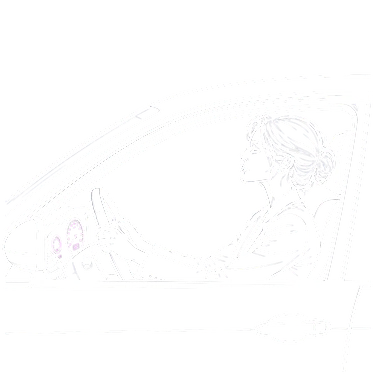
She smiles in the meeting, she breaks down in her car.
Their tone has gone up a notch over the past three weeks, and no one has told them.
A manager who blows up and a manager who bottles it up have the same problem. We only see it in the first one.
It will be put down to character. Usually it is a reflex that no one taught them.
The cost of the problem
69%of employees rank their manager alongside their spouse in what weighs on their mental health
Ahead of their doctor (51%), ahead of their therapist (41%). And for 60% of them, it is work that weighs the most. No one signs up for that when they take on a team. Yet that is what the job does.
That is what they report. The rest shows up in the accounts of France's national health insurer.
Official data from the Assurance Maladie, France's national health insurer, rising steadily. Occupational risks, press release of 21 April 2026, 2024 data (20.8 million employees under the general scheme); average length of leave, 2016 data. UKG, Workforce Institute, Walr survey, 3,400 employees, 10 countries including France.
At that point, the issue leaves HR and lands on the finance director's desk. One long absence in three comes from a mental health condition: 37% of absences over thirty days. Two insurers, working independently, arrive at the same order of magnitude.

The answer
In adults, emotional competence can be developed. On two conditions: good training, and support that carries on inside the company once the room has emptied.
52%of managers report work-related psychological problems
Across all employees, 45% are in psychological distress. Managers are asked to hold the team together, and no one has taught them how.
Empreinte Humaine / OpinionWay barometer, March 2025, 2,030 representative employees.
The five dimensions of the assessment
A colleague speaks, irritation rises, and you have one second to decide what to do with it. What develops is what happens in that second.
Naming what rises, before it spills over.
Emotion listened to, not obeyed on the spot.
Sensing what they are going through, before they say it.
Connecting, defusing, deciding together.
The obstacle becomes a way through again.
The same five dimensions
From the employee to the company
Kotsou, Nelis, Grégoire & Mikolajczak, Journal of Applied Psychology, 2011 (randomised trial, design and conclusions) · Li, Yin, Shi, Damen & Taris, Journal of Business Ethics, 2024 · Montano et al., Journal of Organizational Behavior, 2017, with the caveat from Harms et al., The Leadership Quarterly, 2017 · convergence of WTW 2025 (36%) and Malakoff Humanis 2026 (37.8%), insurers, conflict of interest disclosed
In what setting
The model
A proprietary framework. It does not put you in a box: it makes what you already do observable, so you can develop it.
Under pressure
These are not two opposing profiles. It is the same absence of regulation, showing two faces depending on the person and the moment.
What protects, measured: having autonomy in your work lowers the risk of depressive symptoms (0.73), across studies that follow employees over time.
Theorell et al., BMC Public Health, 2015 (high decision latitude, 19 studies, 158,251 people, prospective designs)
If you manage people
Five leadership indicators, calculated from the same answers. The report gives them to you as reference points.
SingularityThe ethics and candour you let others see.
MentorYour ability to help someone grow.
VisionSetting a direction that holds up on a Monday morning.
InnovatorTaking a risk, thinking against the grain.
Leadership reducersThe reflexes that make you dodge rather than decide. Here, a low score is good news.No one is going to tell you these things in a corridor.
The 360, how others see you
An emotional intelligence test generally asks you to rate yourself. As long as the same person fills in the questionnaire and judges the result, everything agrees. Ask colleagues the same question, and the agreement collapses.
The 360 is part of the tool, at no extra cost, and you decide whether to launch it. Your colleagues then answer anonymously, and the result appears only once there are two answers. What they see in you, you may never have heard.
6 of 46
Of the forty-six studies identified in this field, only six went and asked the people around the participants. The others took people at their word.Kotsou et al., Emotion Review, 2019, review of the 46 studies in the field.
The evidence
The question is a fair one, and part of this market deserves it. These skills matter at work, without explaining everything. Many tests sold elsewhere actually measure personality under another name.
One study went further. Participants were assigned at random, the same method used to test a drug.
A hormone, not a statementAmong those who had been trained, the level of cortisol, the stress hormone, had fallen.
Confirmed by those close to themThe people close to them noticed the change, each independently.
Still there a year laterFollow-up ran to one year. That is rare in this field.The other studies on training measure test scores. Answering a test well and handling a tense meeting are not the same thing, and we are not going to pretend otherwise.
Elsewhere you will come across spectacular figures on the share of performance that emotional intelligence is said to explain. Not one of them points to a study you can go and read, and that is why they are not here.
None of these results belongs to us. The day the first AGILIS Emo assessments produce their own, those will take this place.
Kotsou, Nelis, Grégoire & Mikolajczak, Journal of Applied Psychology, 2011 (randomised trial; design and conclusions, never an effect size)
Before you decide
No. The report describes what you already do, what comes to you effortlessly and what costs you effort. You open it with a trainer, and you remain the only judge of what sounds like you.
Because the same sentence does not land the same way with two different people. Spotting what the other person is going through, often before they say it, is exactly the work of social awareness.
Reading your profile once changes nothing. What holds is a short exercise repeated every day for a week, and traces of it were still found six months later. One study runs to a year, another finds nothing at six months. We do not promise it will last, we ask you to practise.
Seligman et al., American Psychologist, 2005 · Kotsou et al., 2011 · Hodzic et al., Journal of Vocational Behavior, 2015.
A fifteen-minute questionnaire, online. The trainer receives the profile straight away. You open it with them, in a personalised debrief. The 360, if you choose to launch it: your colleagues answer anonymously, and answers are grouped only once there are two.
The price is set by the certified trainer who works with you.