AGILIS Com®, the model of communication styles

“One cannot not communicate.”

Paul Watzlawick, Pragmatics of Human Communication, Norton, 1967

You already communicate. Without thinking about it. So does your team. AGILIS Com turns it into a shared language.

  1. 15 minThe questionnaire, online.
  2. Straight awayThe profile, with your trainer.
  3. Face to faceThe debrief, never on your own.

The cost of the problem

Misunderstanding each other has a cost. Every year.

NearlyEUR 12,000per employee per year

20 daysper employee per year spent dealing with conflict: a month of work.
EUR 152bnwhat that time costs France every year: more than 10 billion a month.
8%of employees in France are engaged, one of the lowest rates in Europe.
21 to 200%of annual salary: the cost of a departure nobody saw coming.

Harris Poll for Grammarly, 2022: USD 12,506, converted at the ECB 2022 average rate · Observatoire du Coût des Conflits, OpinionWay for All Leaders Initiative and topics, 2021, 974 employees · Gallup, 2026 · Boushey and Glynn, 2012 · SHRM Foundation, 2008

52% of employees who left say their departure could have been prevented (Gallup, 2019). What goes wrong has a mechanism. It can be read with AGILIS Com®.

The answer

The return shows on a single team.

Nobody decided on this loss. It is paid all the same. What does get decided is what you put up against it.

About250%net return for the employer, within the following year

Measured by the only large-scale randomised trial on this type of training, on real production data: 13 to 20% more productivity. The mechanism transfers, the percentage does not: it was measured in garment manufacturing, in India.

Read yourselfNothing is asserted. The profile is opened with a trainer, can be challenged, and each person decides for themselves.
Understand othersWhat irritates you about them is not a flaw. It is a need that is no longer being met.
Complement each otherThe gap stops being an accusation. Two Elements that were at odds share out the work.
Make it lastA profile on its own fades. Practised every day, the effect is still measurable at six months. A certified coach takes over beyond the training room, on conflict as much as on stress.

Adhvaryu, Kala and Nyshadham, Journal of Political Economy, 2023 (randomised trial, 1,087 employees trained out of 2,703) · Seligman et al., American Psychologist, 2005 (randomised trial)

You may well have bought colours before. If they stayed on the wall, it is because nothing followed. Here, what follows is part of what you buy.

A pilot, not a plan. One team, three stages: questionnaire, profiles, debrief. The proof is made in your own organisation.

  1. 01

    What surfaces

    One or two Elements come to you without any effort. They are what others see first.

  2. 02

    The waterline

    Other people’s gaze stops here. Yours goes on.

  3. 03

    The effort zone

    These Elements remain available. Activating them takes energy, holding them over time wears you out.

  4. 04

    The bottom of the Iceberg

    The deepest one costs you the most. In someone else, it fascinates you, or irritates you the moment it goes off track.

Be the best version of yourself.

Once you have the profile

What becomes possible.

Read yourself Your reflexes, named. Including the ones that cost you.
Understand The other person is not difficult. They are different.
Complement each other What you lack is already sitting at the table.
Discover yourself The model asserts nothing. It sheds light, you do the recognising.
Confront yourself What others see of you. Hard to read, valuable to know.
Be supported A profile does nothing on its own. A coach or a trainer, face to face.

From the employee to the company

Everyone gains, and not the same thing.

AGILIS Com belongs to the family of behavioural profiling approaches. What they bring is documented, with figures to back it up.

The employee Read yourself, be read A profile, needs named, what gets things moving again. Each person leaves with their own map. A manager focused on each person’s strengths: 61% engaged employees, twice the average (Gallup).
The manager One style per person The same instruction does not have the same effect. Knowing which one to give, to whom, and seeing pressure coming. At least 70% of the variance in engagement between teams comes down to the manager (Gallup, 2015).
The team A shared language Disagreement changes what it is about: you no longer judge a person, you name a gap between two Elements. The leading cause of communication breakdowns: differing styles, at 42% (Economist Intelligence Unit, 2018).
The company People who stay Wearing down and leaving often play out there: in what was not said, or not heard. The most engaged teams see 21 to 51% less turnover (Gallup Q12 meta-analysis, 2024).

In what setting

Six uses, a single questionnaire.

Management training A manager who finally adapts their style.
Communication training Two departments that had stopped talking, reconciled.
Team building A team day that actually leaves a mark.
Personal development Understand yourself first, then move forward better.
One-to-one coaching A certified coach who stays with you over time.
Team diagnostic A snapshot of the team, before acting.

The same inventory. Six ways to use it.

Three office scenes

What gets stuck has a name.

He decides in three seconds, the other person just wanted a night to think it over.

Go-getter versus Imaginative: the Pace axis.

She answers with process and deadlines, he first wanted to know how you were.

Methodical versus Accommodating: the Method axis.

He defends the case point by point, she defuses everything with a joke.

Tenacious versus Playful: the Frame axis.

None of this is a people problem. These are gaps between Elements, and a gap can be prevented.

The six Elements

No one is a colour.

The colour names the Element, never the person. You have all six, each at its own depth: what changes is the order and the intensity.

When the pressure rises

A need that is fed brings the pressure down.

Unmanaged pressure sets in when a need stops being fed: agility disappears and everyone retreats into their own Element, in its negative version. The Elements face one another in pairs.

Portrait illustrating the Go-getter Element
The Go-getter
makes the call in three seconds
Portrait illustrating the Imaginative Element
The Imaginative
just wanted a night to think it over

Telling a Go-getter to “calm down” worsens the very thing you want to put out: you do not reason with a need, you feed it.

The Method axis: Methodical versus Accommodating The Frame axis: Tenacious versus Playful

The 360, how others see you

Two readings of the same profile.

The inventory says how you see yourself. The 360 says what others see. Beyond a 20-point gap, others read you differently from what you believe: that is a blind spot.

We are so accustomed to disguise ourselves to others that in the end we become disguised to ourselves.
La Rochefoucauld, Réflexions ou Sentences et Maximes morales, maxim 119
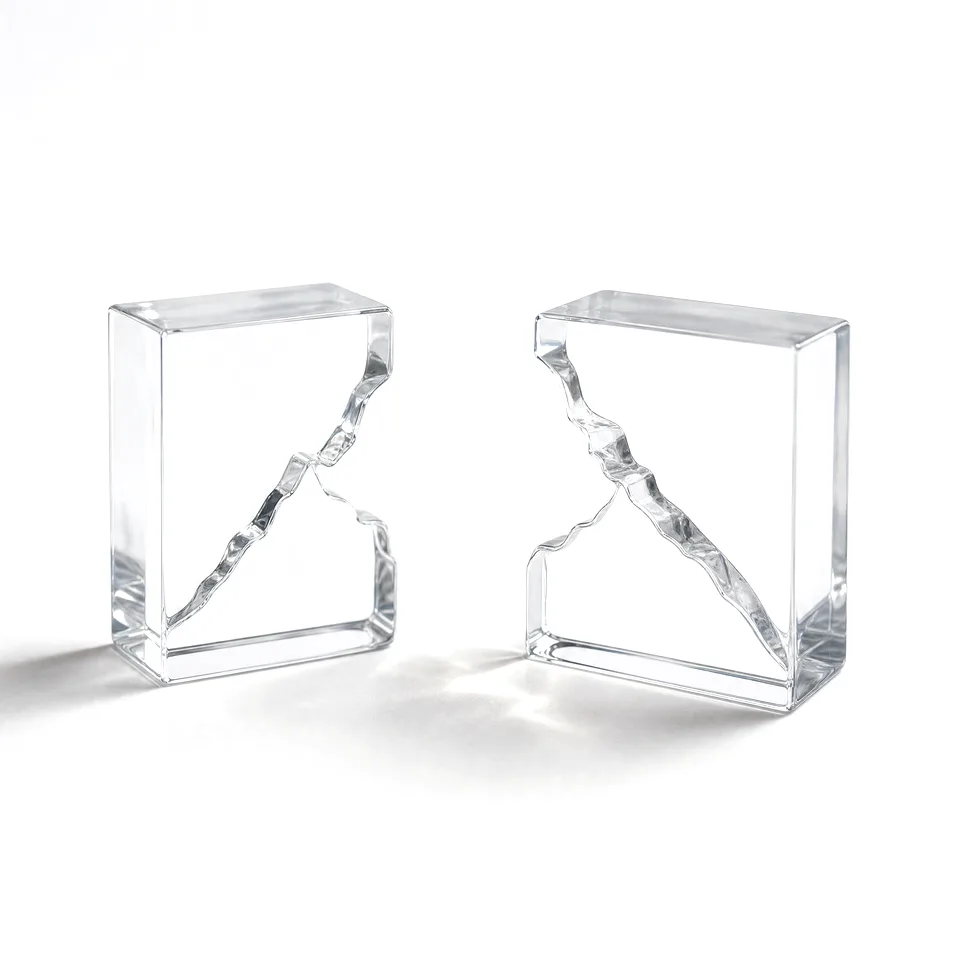
A block of ice and its reflection: the reflection does not quite match the object.

The significant gap threshold. From 2 observers upwards, answers are anonymous.

If you manage people

Your six styles, and what they become under pressure.

Each Element governs a management style. Under pressure, that same style tips into its negative version. It is not a different manager, it is the same one, whose need is no longer being fed. You have all twelve.

Twelve team roles follow from this, two per Element. Yours, and the one missing from the table.

The one missing from your table cannot be guessed. It can be read.

Before you decide

Nine questions. Open yours.

The model “Are you going to put me in a box?”

No, and it is the model itself that says so: a map is not the territory.

  • It describesNot what you are: how you communicate today, what comes to you without effort and what takes some.
  • It does not judgeThe result opens up avenues. It does not deliver a verdict.
  • The call is yoursYou go through it with a trainer, you test it against your own reality, and you remain the sole judge of what fits you.
Managing “Why does it click with one person and stall with another?”

You have the six management styles, and their drift under pressure. Agility is not a change of personality, it is opening your toolbox.

  • The right styleWhich one to use, with whom, and when.
  • Your drift, before the others see it Under pressure, a Methodical becomes bureaucratic, an Imaginative becomes absent.
  • The form, not the substanceAdapt the former without ever giving way on the latter.
Team “Is he really the problem?”

Conflict is blamed on people when it is structural. Naming an Element depersonalises the disagreement: instead of “he is difficult”, you say “we are on the Pace axis”. The same observation, without putting anyone on trial.

  • A common languageIt outlives the training, and it takes hold in meetings.
  • Twelve team rolesSee which one the group is missing, and activate it.
  • The real diagnosisUnderstand why a team full of ideas produces no results.
Change “Are all my resisters resisting the same thing?”

No. Not everyone hears change the same way, and a single communication plan treats resisters as opponents. You do not need six messages, you need six ways into the same message.

  • The opening sentence The Tenacious wants the meaning, the Methodical wants the plan, the Go-getter wants the first move.
  • Withdrawal is not opposition In an Imaginative, it is a need for space.
  • DisengagementAnticipate who disengages, when, and over which need.
Client relations “Why do I mainly convince people like me?”

Because we sell our own Element. Yet non-verbal signals, delivery and the first few words are often enough to place the Element of the person you are talking to.

  • The first few secondsSpot the register of the person opposite you.
  • The right registerStop talking figures to someone who wants connection, and vice versa.
  • The tipping pointRecognise a client tipping under pressure, before they close up.
The two Dimensions “Two people, the same Element, and nothing alike?”

The Elements define the WHY, your deep motivations. The Dimensions define the HOW, your action strategies. They are independent of the Elements: a Methodical can be Flexible, a Playful can be Anticipating.

  • Your relationship with timeAnticipating: you spend your energy early to gain peace of mind. Flexible: you hold it back and release it at the key moment, spurred on by the deadline.
  • Your relationship with social energyIntroverted: you do not put yourself forward in a group. Extroverted: you like being the centre of attention.
Introverted Extroverted Anticipating PIThe Solitary Strategist PEThe Social Organiser Flexible FIThe Discreet Responder FEThe Collective Improviser

Four combinations follow from this. They are established during the debriefing with the trainer, not by the questionnaire alone.


The arithmetic “Six Elements, so only six profiles?”

Behind the six markers, the fine grain of the model: these are not six objects, they are six positions, and it is the order that counts. A map is not the territory, and yours is still to be explored.

720possible orderings of the six Elements
× 2Fundamental and Current, merged or distinct
× 4the two Dimensions: Anticipating or Flexible, Introverted or Extroverted
× ∞the intensity of each Element changes the dynamic
In practice “How does it actually work?”

A questionnaire of about fifteen minutes, each statement rated from 1 to 7, brings out your profile. The trainer has the result immediately. You open it with them, in a one-to-one session or during a training course, never alone.

  • The reportElements, needs, behaviour under pressure, roles, management style, friction axis, action plan.
  • The 360Optional, anonymous, aggregated from 2 responses upwards.
  • ExplorerA version exists for ages 11 to 25.
  • After the classroomThe online course and the coach remain available: that is where the common language takes hold.
Recruitment “Can I use it for recruitment?”

No, and this is not window dressing: the law and the method say the same thing. A diagnostic describes how someone communicates today, never what a candidate will be worth tomorrow.

  • Neither designed nor offered for thatAGILIS Com® is a tool for development and dialogue, not for selection. It reflects self-reported preferences, not aptitudes, and does not predict success in a role.
  • The rules are written downArticle L1221-8 of the French Labour Code requires that a method used as a recruitment aid be relevant to the position; practical fact sheet no. 11 from the CNIL, the French data protection authority, points out that a personality test must have a direct and necessary link with the job. A behavioural profile does not establish one.
  • Where it belongsOnce the person has been hired: settling them in, getting them talking, adjusting how they are managed, binding the team together. That is where it makes a difference.

The evidence

Our figure, and the ones from research.

From industry to retail, from luxury to services: organisations of every size, for jobs that have nothing in common. The language, though, is the same.

AGILIS Com® satisfaction: average of end-of-course evaluations for 2025, compiled in February 2026 from all certified trainers · CPP Global Human Capital Report, 2008 (5,000 employees, 9 countries) · Seligman et al., American Psychologist, 2005 (randomised trial)

A common language cannot be spoken alone.

  1. 15 minThe questionnaire, online.
  2. Straight awayThe profile, with your trainer.
  3. Face to faceThe debrief, never on your own.

The price is set by the certified trainer who supports you.

agiliscom.org